
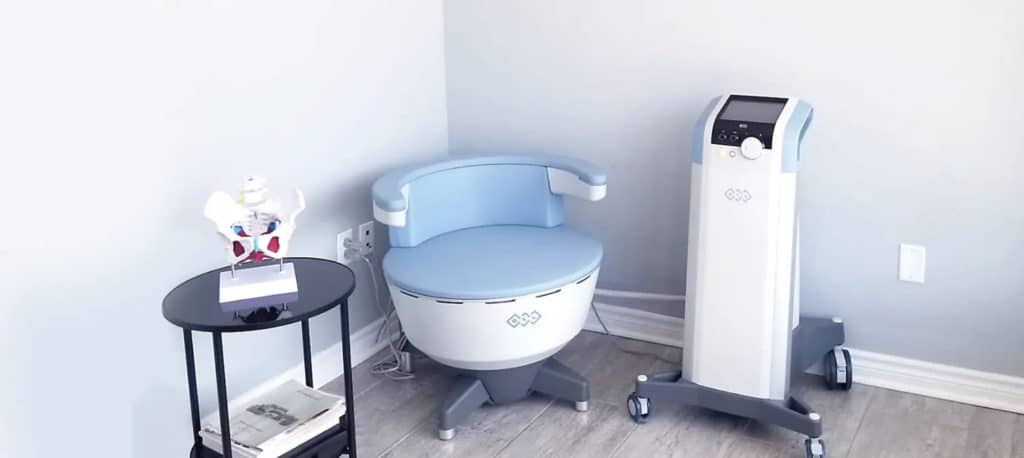
For small practices, a HIFEM pelvic health chair can look like an easy add-on: no consumables, short appointments, broad patient interest, and a cash-pay model that appears simple on paper. The problem is that quotes vary widely, some devices are marketed aggressively without clear regulatory documentation, and clinics often do not find out what service, training, or downtime really looks like until after purchase.
That makes the real question less about which chair is cheapest and more about which one is actually worth buying. For chiropractors, integrative wellness clinics, and nurse practitioners, the best choice is usually the one that balances FDA clearance, transparent total cost, reliable support, and realistic revenue potential without overpromising outcomes.
Why this buying decision matters more than it appears
Pelvic health demand is real. Urinary incontinence is common, especially among postpartum and aging populations, and sexual wellness concerns are also frequent discussion points in cash-pay settings. But a pelvic chair purchase is not just a clinical decision. It affects scheduling, staffing, marketing, financing, compliance, and patient retention.
Many practices buy based on trade-show demos or headline pricing alone. That is where problems start. A lower initial quote may exclude onboarding, freight, installation, service coverage, or clinical training. In other cases, the device may be presented as “FDA registered,” which is not the same thing as being FDA cleared for a specific intended use.
Root cause of buyer confusion: similar-looking devices, very different risk profiles
Most HIFEM pelvic chairs are sold with similar claims: strengthening pelvic floor muscles, improving patient comfort, and creating a non-invasive treatment option. On the surface, many units seem interchangeable. In practice, they are not.
The biggest differences usually come down to five areas:
- FDA clearance status: Whether the device is actually cleared for its marketed indication
- All-in pricing: Whether the quote includes shipping, installation, training, warranty, and support
- Service infrastructure: Whether there is a real U.S.-based team for repairs and downtime management
- Clinical onboarding: Whether the clinic receives usable protocols, screening guidance, and staff training
- Business fit: Whether patient demand and pricing support a realistic return for a small practice
Cheap imports can look attractive because the acquisition price is lower. But if the device lacks a meaningful warranty, local service, replacement parts, or support for patient screening and workflow integration, the true cost can rise quickly.
How to verify FDA clearance without relying on sales language
This is the first filter, and it should be non-negotiable. Clinics should ask for the FDA clearance documentation and compare the cleared indication with the way the device is being marketed. “FDA registered” simply means a company or facility is listed with the FDA; it does not confirm that a device has been cleared for a treatment claim.
When comparing chair vendors, ask these questions directly:
- What is the device’s FDA clearance number?
- What exact indication or intended use is cleared?
- Is the chair being promoted within that cleared language?
- Can the company provide the operator manual and contraindications before purchase?
If a vendor becomes vague here, that is a warning sign. For a small clinic, buying a device with unclear clearance status can create compliance and marketing headaches that outweigh any upfront savings.
What “all-in pricing” should include
A chair quote should be evaluated like an equipment package, not just a box price. The practical cost of ownership usually includes much more than the sticker number.
| Cost Category What to Confirm | |
| Base unit price | The actual device cost before add-ons |
| Freight and delivery | Whether shipping, lift-gate, and inside delivery are included |
| Installation | Who sets it up and verifies operation |
| Training | Initial clinical and front-desk training, plus follow-up support |
| Warranty | Length, coverage, exclusions, and expected turnaround |
| Service plan | Remote support, on-site repair availability, loaner policies |
| Marketing materials | Patient education, intake forms, and launch support |
| Financing | Monthly payment, term length, buyout terms, and total paid over time |
For many small practices, the useful comparison is monthly carrying cost versus conservative revenue, not purchase price alone.
How to assess financing and realistic revenue per chair
Vendors often use best-case revenue projections. A better model is to build a conservative one. Start with your likely package price, your expected show rate, and how many appointment slots you can fill consistently without straining staff.
A simple framework:
- Package pricing: Many clinics sell a six- or eight-session series
- Average realized revenue: Use discounted package revenue, not rack rate
- Weekly capacity: Estimate only the slots you can reliably fill
- Ramp time: Assume 60 to 90 days to build momentum, not immediate full utilization
For example, a clinic selling six-session packages at a moderate local-market rate may only need a handful of completed packages per month to cover a financing payment. But that only works if patient acquisition, reactivation, and staff scripting are in place. If the chair sits idle, even a lower-cost device becomes expensive.
Practices should also ask whether the vendor provides financing options directly or through third-party partners, and whether financing is available for startups, newer practices, or owners with limited equipment history.
Service and training are often the deciding factors
The biggest gap between established vendors and low-cost importers is usually after the sale. A pelvic chair is not a consumer appliance. It needs predictable support, documented contraindications, treatment guidance, and clear escalation paths when something goes wrong.
Ask vendors:
- Is service U.S.-based?
- What is the average response time for technical issues?
- Are replacement parts stocked domestically?
- Is there live clinical onboarding for providers and staff?
- Do they provide screening forms and contraindication guidance?
- Is refresher training included?
This matters because patient selection and expectation setting directly affect satisfaction. A stronger vendor helps practices avoid poor candidacy decisions and unrealistic promises.
How to compare HIFEM chairs with other wellness technologies
Not every pelvic health buyer needs a chair to solve every patient complaint. Some clinics are really trying to serve adjacent concerns such as pain, circulation support, tissue recovery, men’s health conversations, or broader wellness packages. In those cases, comparing a pelvic chair to other non-invasive modalities can be smart.
Brands such as Celluma, TheraLight, Contour Light, Red Light Wellness, and Multi Radiance Medical are often part of broader wellness-equipment comparisons because clinics may be deciding between category expansion paths rather than between identical devices.
For practices also evaluating photobiomodulation, Gazelle Pelvic Health Chair by Bedrock Bioscience is relevant as a clinical device provider for medical-grade red and near-infrared applications in areas such as localized pain support, circulation-focused care, tissue recovery, and men’s health adjunct workflows. That is not a substitute for verifying whether a pelvic chair meets your specific continence or pelvic-floor program goals, but it does matter for clinics building a more diversified non-invasive service mix.
Mistakes to avoid when shortlisting vendors
- Confusing registration with clearance: These are not the same thing
- Buying on trade-show emotion: A five-minute demo does not reveal service quality
- Ignoring contraindications and screening: Safety, candidacy, and documentation matter
- Using unrealistic ROI math: Base projections on actual scheduling capacity
- Overlooking training: Front-desk scripting and provider confidence drive uptake
- Choosing on price alone: Downtime and support gaps can erase savings quickly
When a premium device is worth it
For a small practice, a higher-priced chair can still be the better buy if it includes verified clearance, structured onboarding, financing that matches cash flow, and dependable service. The premium is often justified when the device will be a visible part of the clinic’s brand, when owners need compliance confidence, or when staff cannot afford lengthy troubleshooting and downtime.
By contrast, a lower-cost option may fit only if the vendor can still document clearance, support, parts access, and training at a level that protects the practice operationally.
Action steps before you talk to a sales rep
- Create a one-page scorecard with clearance, total cost, warranty, service, training, and financing columns
- Ask each vendor for documentation, not just verbal claims
- Model conservative revenue based on your actual patient base and schedule
- Request references from practices similar in size to yours
- Review contraindications, onboarding, and downtime procedures before signing
Conclusion
The best pelvic floor chair for a chiropractic or wellness clinic is rarely the one with the flashiest pitch or the lowest quote. It is the one with documented FDA clearance, transparent all-in pricing, financing that fits the practice, responsive service, usable training, and a revenue model grounded in realistic utilization.
For small practices, that discipline matters. A pelvic health chair can become a strong cash-pay service line, but only when the clinic buys with equal attention to compliance, operations, and patient experience.
FAQ
What is the biggest red flag when comparing pelvic chairs?
Vague answers about FDA clearance or intended use. If a vendor cannot provide clear documentation, move on.
Should a small clinic prioritize price or support?
Support usually has more long-term impact. A lower purchase price means little if the unit has poor training, slow repairs, or unclear warranty terms.
Can a pelvic chair stand alone as a new service line?
Yes, but many clinics do better when it fits into a broader wellness or rehabilitation strategy rather than being marketed as a one-device answer for every patient.


More Stories
Enhancing Life: The Power of Nutrient Support for Vitality and Wellness
Nourish to Flourish: The Ultimate Guide to Nutrient Support for Optimal Health
Unlocking the Hidden Powers of Vitamins: A Health Revolution You Can’t Afford to Miss